
“We shouldn’t want it.” Montgomery County officials respond to data center rumors
Data centers are a fast-spreading and hotly contested development in the technology industry, and rumors of one coming to Montgomery County have raised concerns in both residents and county officials.
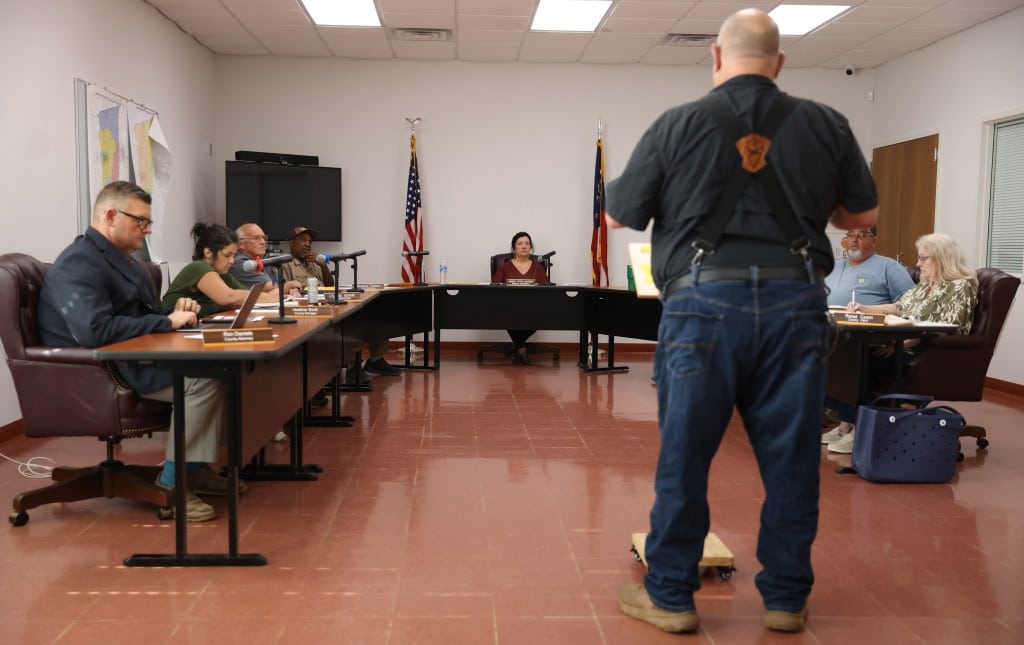
Data centers are a fast-spreading and hotly contested development in the technology industry, and rumors of one coming to Montgomery County have raised concerns in both residents and county officials.
“It is my humble and personal opinion that this is a bad thing,” said Montgomery County Commissioner Amie Vassey. “We shouldn’t want it. I don’t want it, and we should do whatever we can to get ahead of it.”
The discussion began during the Board of Commissioner’s May 7 work session, during which Vassey revealed the local tax assessor had been approached in January regarding potentially leasing two acres of land for a data canter.
According to technology company IBM, data centers are “a physical room, building or facility that houses IT infrastructure for building, running and delivering applications and services.” These infrastructures store and manage the data for a variety of services and applications, ranging from company emails to AI.
AI in particular has spurred the recent boom in data center construction, as the technology requires massive amounts of power, water and hardware to operate. According to a Congress report released on May 12, data centers in 2023 utilized approximately 176 terrawatt-hours or 4.4 percent of all electricity in the U.S., not counting cryptocurrency operations.
Miguel Yañez-Barnuevo for the Environmental and Energy Study Institute published an article claiming larger data centers may “consume up to 5 million gallons per day, equivalent to the water use of a town populated by 10,000 to 50,000 people.”
Others have claimed data centers also impact the quality of local drinking water, such as the residents of Morgan County. The quality of Morgan County’s drinking water attracted the attention of Representative Alexandria Ocasio-Cortez, who brought up the issue during a congressional hearing on May 20.
Water quality also proved to be a major concern for Montgomery County Board Chair Ginger Morris.
“I’m concerned about the water supply because we are an agricultural county,” said Morris.
According to Montgomery County Attorney Ron Daniels, Georgia state law prohibits local governments from limiting the amount of water or electricity data centers consume.
Also, since many counties share the same aquifer, a data center need not be constructed in Montgomery County to affect its water supply. A data center can affect a community’s electricity bills in a similar manner, as Georgia Power calculates bill rates based on general usage state-wide, not individual usage.
While some communities are wary of data centers, other communities, such as Twiggs County, have welcomed data center construction due to the amount of tax revenue they may provide, despite a lawsuit to prevent it.
Data centers are not a guaranteed source of tax revenue. When speaking to the Montgomery County Board of Commissioners, County Attorney Daniels said many companies building data centers will often ask for and receive tax abatements.
Georgia’s fiscal projections for 2026 indicate a loss of $2.5 billion in tax revenue from data centers’ sales tax exemptions.
When asked for his expertise, Montgomery County Development Authority Director Michael Stanley said companies constructing data centers often have the monetary advantage to outmaneuver local communities.
“Private companies with billions of dollars move a lot more quickly than what we can as, you know, local communities,” said Stanley.
Due to this advantage, residents may be unaware of an incoming data center until deals are set in stone, such as the residents of Augusta currently considering a moratorium against a data center planned as far back as 2022. Multiple Georgia communities have utilized moratoriums to fight the construction of data centers, such as Roswell, Rockdale County and DeKalb County.
Instead of a moratorium, Vassey suggested the board consider implementing land ordinances to prevent the construction of data centers during their meeting on May 7.
Following the meeting, attorney Daniels drafted a special use permit ordinance pertaining to data centers, which he presented to the board during their June 4 work session. According to Daniels, drafting an ordinance of this sort is difficult due to the unpredictable advancement of technology.
“Part of the difficulty of drafting an ordinance like this is that technology is rapidly changing,” said Daniels.
Another issue is crafting the ordinance without violating the constitutional rights of the land owners. Because of this, the board cannot pass an ordinance outright banning data centers, nor can they draft the ordinance in such a way that the requirements would make construction physically impossible.
“Generally, you’re entitled to handle your property and do with it as you please,” said Daniels. “If you wanted to sell it to Ron Daniels, you can sell it to Ron Daniels. If you want to go out there and use it just to go sunbathe every day, you can do that. If you wanted to sell it to the crown prince of Persia, you can do that.”
Nevertheless, the ordinance drafted by Daniels aims to make the construction of a data center financially difficult, while also granting the county as many opportunities as possible to reject a data center.
The ordinance would charge businesses $10,000 per data center on top of more usual application charges. Large “campus” centers can house multiple data centers within, and would then incur the $10,000 charge more than once.
In addition, the business would be required to take a legally binding oath to not seek any form of tax abatement, which Daniels described as a “poison pill” for businesses.
Companies would also be required to provide an environmental impact report to county officials and to residents, alongside other transparency measures such as a required community meeting and close collaboration with county departments. The environmental report would have to be provided by a third party affiliated with neither the applicant company nor the federal government.
The ordinance contains a number of other requirements and restrictions which, upon failure, give the board the right to reject a data center. The board may also make specific requests of a data center not listed in the ordinance, such as requiring extra protection against coolant leakages.
“To just kind of give you the large overview, I think this is perhaps the most restrictive special use permit for data centers currently being considered by any county or municipal government in the state of Georgia that does not have zoning,” said Daniels.
Commissioner Leland Adams took issue with the ordinance, saying the issue and others like it could be handled with a zoning board instead.
“Are we just only going to go after data centers?” said Adams. “I mean, I suggest we do full zoning and have any time anything comes in, or wants to come in, then it goes before review board and process, and we know what’s going on that way.”
Vassey also expressed interest in forming a zoning board, but said she has not “met a citizen yet that has said that they’re okay with zoning.”
According to Daniels, both a special use permit and zoning board could be adopted equally as quickly, with a zoning board providing the same protections and options as ordinances without the need to draft and adopt new ordinances.
“You can Band-Aid this and come up with… an ordinance for every monster that comes along, or you can use zoning and knock it all out,” said Daniels.
The required maps would also be sourced from the region commission, which already has maps labeled with relevant zones.
He also noted the two options are not mutually exclusive, suggesting the board could adopt an ordinance before implementing a zoning board later on. The zoning board would simply render the ordinance irrelevant.
Ultimately, at County Manager Heather Scott’s recommendation, the board opted to wait and further review the ordinance and potential options rather than make an official decision on June 8.
Before you go...
Thanks for reading The Tri-County Connector. We hope this article added to your day.
We are a nonprofit, local newsroom that connects you to the whole story of Macon-Bibb County. We live, work and play here. We know Middle Georgia, and our reporting illuminates and celebrates the people and events that make this area unique.
If you appreciate what we do, please join the readers like you who help make our solution-focused journalism possible. Thank you
Related Articles
Hurricane Season is Here. Here’s What You Need to Know.
The hurricane season for 2026 began on June 1, marking the start of a six month period where residents and emergency responders will be watching for storms.
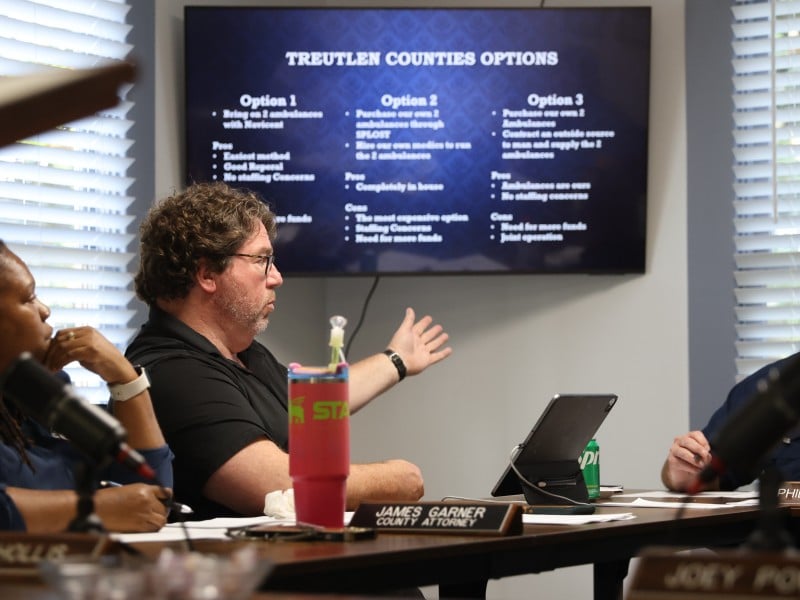
Treutlen Board of Commissioners Confronts a Lack of Ambulances
County Manager Joseph Glenn spoke to the Treutlen County Board of Commissioners during their monthly meeting on June 1 about a plan to raise the number of ambulances in the county from one to two.

A New Drone Will Make Treutlen EMA Operations Faster, Safer and More Efficient
The Treutlen County Emergency Management Agency (EMA) sees improved operations in the future following the addition of a drone to its toolbelt.