
Soperton City Council Considers Raising Millage Rate
The Soperton City Council made plans to consider raising the city’s millage rate after Jan. 1 during their monthly meeting on October 20 in the Soperton City Hall.
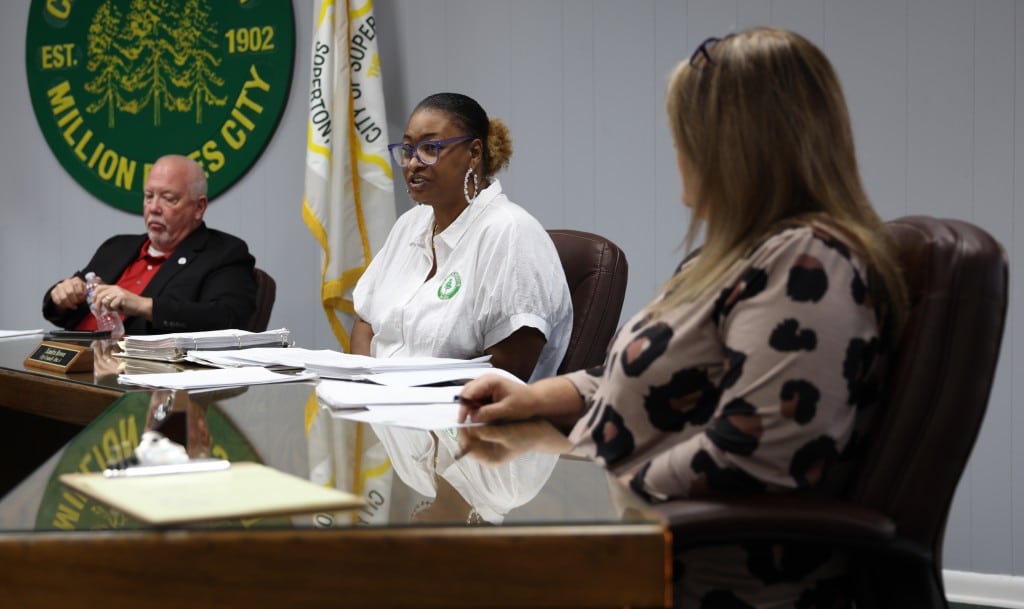
The Soperton City Council made plans to consider raising the city’s millage rate after Jan. 1 during their monthly meeting on October 20 in the Soperton City Hall.
According to Mayor John Koon, the city of Soperton has “been sitting at three points, just a little over three mils” for over 20 years. The city councils through that time period have considered raising the millage rate, but instead elected to delay the decision.
“We’ve kicked it down the road long enough,” said Koon. “It’s got to stop somewhere. Unfortunately, it looks like it’s going to stop with us.”
The council was spurred to consider raising the millage rate due to an upcoming homestead exemption, which will require a reappraisal on all city property taxes. The reappraisal will occur regardless of the council’s decision, though the exemption will allow rates to remain relatively unchanged.
“Having said that, because of the new homestead exemption, that those rates will continue to remain basically the same,” said Koon.
Millage rates are percentages set by a local governing body, such as a city council, board of commissioners or school board, which are used in conjunction with an appraised property value to calculate the amount of property tax owed by a property owner. These funds are then used to fulfill the governing body’s budget.
In the city’s case, the funds are directed towards civil services, such as the police department, the fire department, the water and sewer department and the street department, in addition to other projects, such as Soperton’s $70,000 renovation of the recreation department. Several services and projects rely on property tax funds as they cannot be covered by other funds such as SPLOST.
According to Koon, the city’s current millage rate brings in a revenue under $300,000.
“We have to find a way to be able to make this move forward, and the last thing I want to do is raise taxes, but there comes a time that you can’t live in 1975, 1980 all our lives,” said Koon.
Koon suggested the council vote to table the decision until after Jan. 1, 2026, as he was “not willing to jump on that bandwagon as of tonight.” Councilmember Stephanie Blair offered a motion to table the decision, which passed unanimously.
Koon also suggested the council pass a motion approving the delivery of letters notifying recipients of unpaid taxes, modeled after Treutlen County’s similar methods, in an attempt to coerce citizens into paying their overdue obligations. The letters would be handled by Atlanta-based company Avalanche Mountains.
Councilmember Misty Brantley offered a motion to approve the letters, which passed unanimously.
The council also announced a delay to the enactment of the ordinance banning semi-trucks from driving on city roads. Instead, the council will accept feedback from local truckers and attempt to reach a compromise to satisfy both parties.
The council held a public information meeting on October 16 to explain their reasoning behind the ordinance. According to Mayor Koon, the ordinance aimed to protect the city’s roads and water infrastructure, as a semi-truck’s weight and vibrations from driving would degrade the roads and shake loose water pipes.
The council also planned to provide a dedicated parking space for truckers, though no space had been decided on yet.
Many citizens protested the ordinance during the information meeting, claiming the ban would result in unacceptable disruptions to their businesses and personal lives, such as truckers being unable to return home without assistance. Others offered logistical challenges to the ordinance, such as if a trucker was in possession of a load of live animals in need of monitoring, and even accused the city of employing double standards, claiming city trash trucks and school buses weighed far more than a typical semi truck.
“I know it’s the easiest target,” said Nathan Page during the information meeting. “I know it’s the lowest hanging fruit, but that’s not going to be the main source of your problem.”
At the end of the meeting, Koon asked several Soperton-based truckers to meet with him prior to the regular meeting on October 20, leading to the ordinance’s delay.
“We’ve agreed to meet again in the next couple of weeks and see if we can’t come to some type of mutually beneficial agreement,” said Koon.
Koon also reported the Tiger Creek pavement project, the Second Street pavement project and the debris removal project on the south end of Louisiana Avenue were all progressing. The city also received a $300,000 CBDG grant for a sewer pipe blasting project, which they also hoped to use to fund the land clearing necessary to reach the pipes.
The Soperton City Council meets twice each month at 6:00 p.m., with a work session on the first Monday each month and a regular session on the third Monday.
Before you go...
Thanks for reading The Tri-County Connector. We hope this article added to your day.
We are a nonprofit, local newsroom that connects you to the whole story of Macon-Bibb County. We live, work and play here. We know Middle Georgia, and our reporting illuminates and celebrates the people and events that make this area unique.
If you appreciate what we do, please join the readers like you who help make our solution-focused journalism possible. Thank you
Related Articles

A Look into Local Boards of Education
The week of March 8 to March 14 marks School Board Appreciation Week in Georgia, as proclaimed by Georgia Gov. Brian Kemp, celebrating an important body in local communities.
Montgomery Board of Commissioners Commit to Road Patches and a New Insurance Policy
The Montgomery County Board of Commissioners voted to seek bids to repair Old River Road and to adopt a new health insurance policy during their monthly meeting on March 9.
Tarrytown Trading Post: Small Store in a Small Town
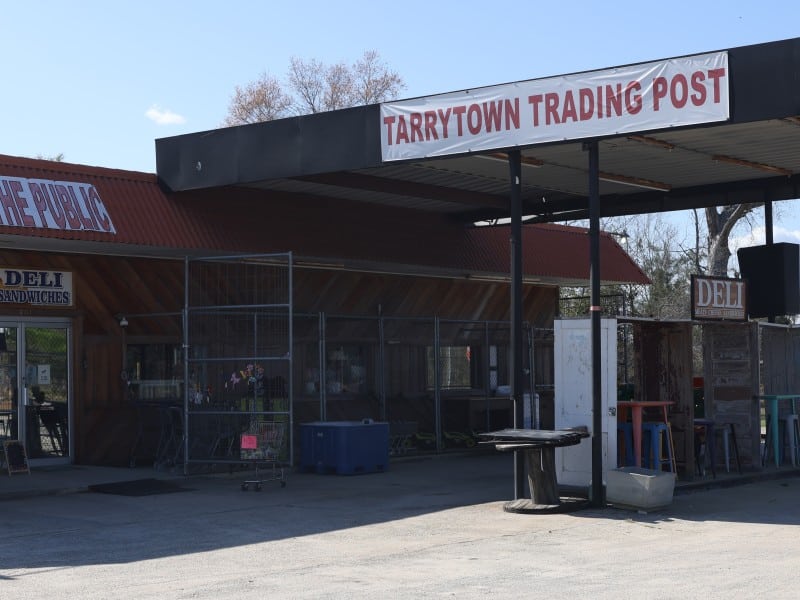
Tarrytown has one major business in the city: the Tarrytown Trading Post, a merchandise and sandwich shop which Chelsea Poole would describe as “hole in the wall type thing.”