
Local Governments Remain Firm on Burn Bans as State Eases Restrictions
Several local governments will maintain pre-established emergency burn bans despite the Georgia Forestry Commission’s (GFC) announcement of a reduction of the state-mandated burn ban area on May 5.
Several local governments will maintain pre-established emergency burn bans despite the Georgia Forestry Commission’s (GFC) announcement of a reduction of the state-mandated burn ban area on May 5.
“It’s still mighty dry,” said Alamo City Manager Jeffery Floyd.
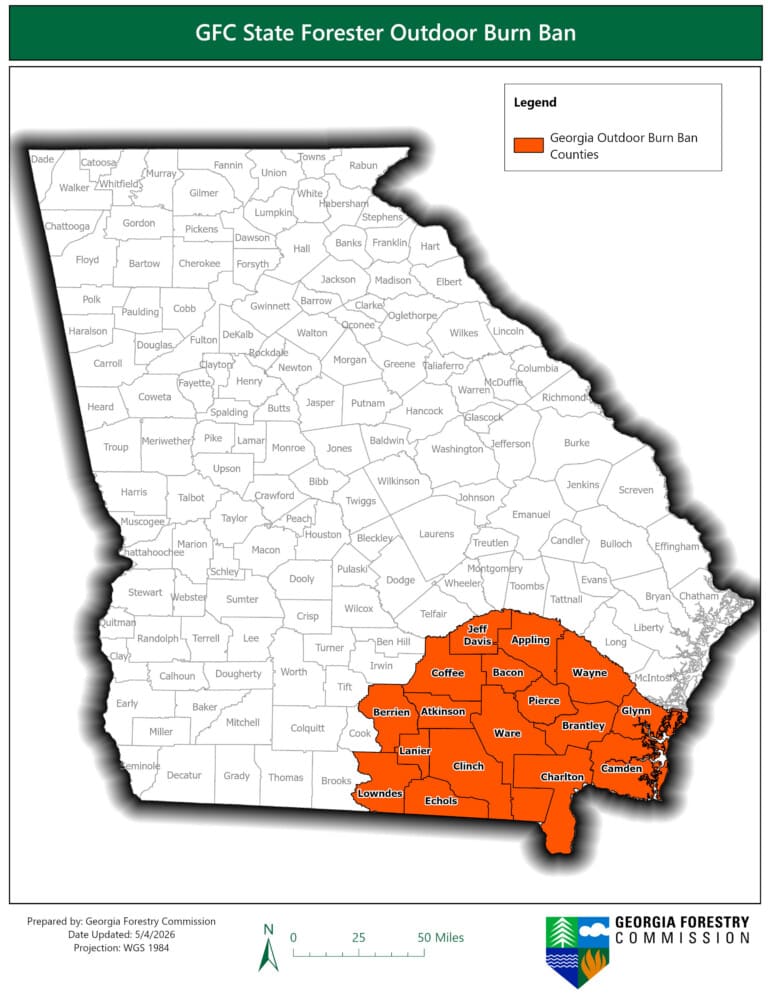
The GFC announced on May 5 a reduction on the number of counties under the mandatory ban on outdoor burning from 91 counties to 17 counties. The affected counties now only include Appling, Atkinson, Bacon, Berrien, Brantley, Camden, Charlton, Clinch, Coffee, Echols, Glynn, Jeff Davis, Lanier, Lowndes, Pierce, Ware and Wayne.
The GFC issued the first iteration of the ban on April 22, which was the first ban of its kind issued by the department. The order prohibits prescribed burns and agricultural burns, the burning of leaf piles or yard debris and applies “regardless of whether such activities require a permit from the State Forestry Commission.”
However, even though the Georgia state government is no longer requiring them to maintain a burn ban, the county governments in Wheeler, Montgomery and Treutlen, as well as city governments such as Alamo and Soperton, have opted to keep their burn bans in place. Many of these bans were put into place days before their GFC’s mandate.
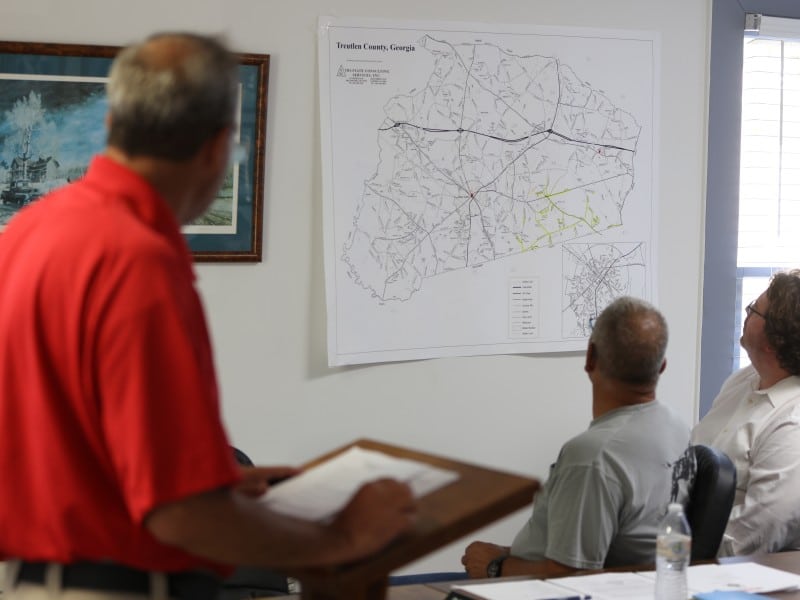
Many of these bans carry penalties for violators, including $1,000 in fines and jail time. The Treutlen County Board of Commissioners also adopted a new ordinance on April 27 allowing county law enforcement to levy these punishments for future burn bans as well.
The primary reason cited by officials as to why the bans are kept in place is the ongoing drought conditions in Georgia. Over 50 counties in Georgia have been reported as experiencing exceptional drought conditions by the United States Drought Monitor, with many more experiencing extreme drought conditions.
According to Treutlen County and Soperton Fire Chief John Johnson, the area would require a five day storm depositing one inch of rain per day to properly alleviate the drought conditions.
Some areas did see rainfall on April 28, such as Treutlen County, but only two-tenths of an inch of rain fell. Chief Johnson said that amount would be nowhere near enough rain to alleviate the current drought.
“Not even a drop in the bucket,” said Chief Johnson.
There was more rainfall over the following weekend, but in a report to the Treutlen County Board of Commissioners on May 4, EMA Director Justin McNure said the area only received a “hair over two inches.”
“I think we got out of all the rain last week, I think it was just a hair over two inches,” said McNure. “Which is, I’m definitely glad we had, but it wasn’t enough to saturate us at all.”
As of May 6, the GFC has responded to a total of 143 wildfires which have burned a collective 541.57 acres statewide. In addition, firefighters have contended with two large wildfires in Clinch County and Brantley County, which have burned 32,575 acres and 22,471 acres respectively as of May 6.
Before you go...
Thanks for reading The Tri-County Connector. We hope this article added to your day.
We are a nonprofit, local newsroom that connects you to the whole story of Macon-Bibb County. We live, work and play here. We know Middle Georgia, and our reporting illuminates and celebrates the people and events that make this area unique.
If you appreciate what we do, please join the readers like you who help make our solution-focused journalism possible. Thank you
Related Articles

Amazon Warehouse in Montgomery County Officially Announced
Montgomery County Development Authority Director Michael Stanley publicly announced the construction of an Amazon warehouse in Montgomery County during the Board of Commissioner’s monthly work session on May 7.

Montgomery County Schools Celebrate Staff with Signing Event
The Montgomery County School System celebrated its new and returning staff members by holding a signing event on May 5 in the Montgomery County High School’s cafeteria.
Treutlen Board of Commissioners Select Amwaste as New Curbside Trash Pickup Provider
The Treutlen County Board of Commissioners selected waste management company Amwaste to provide curbside trash pickup services for residents during their monthly meeting on May 4, following a month of consideration.